Reducing phosphorus loads to improve wastewater treatment efficiency
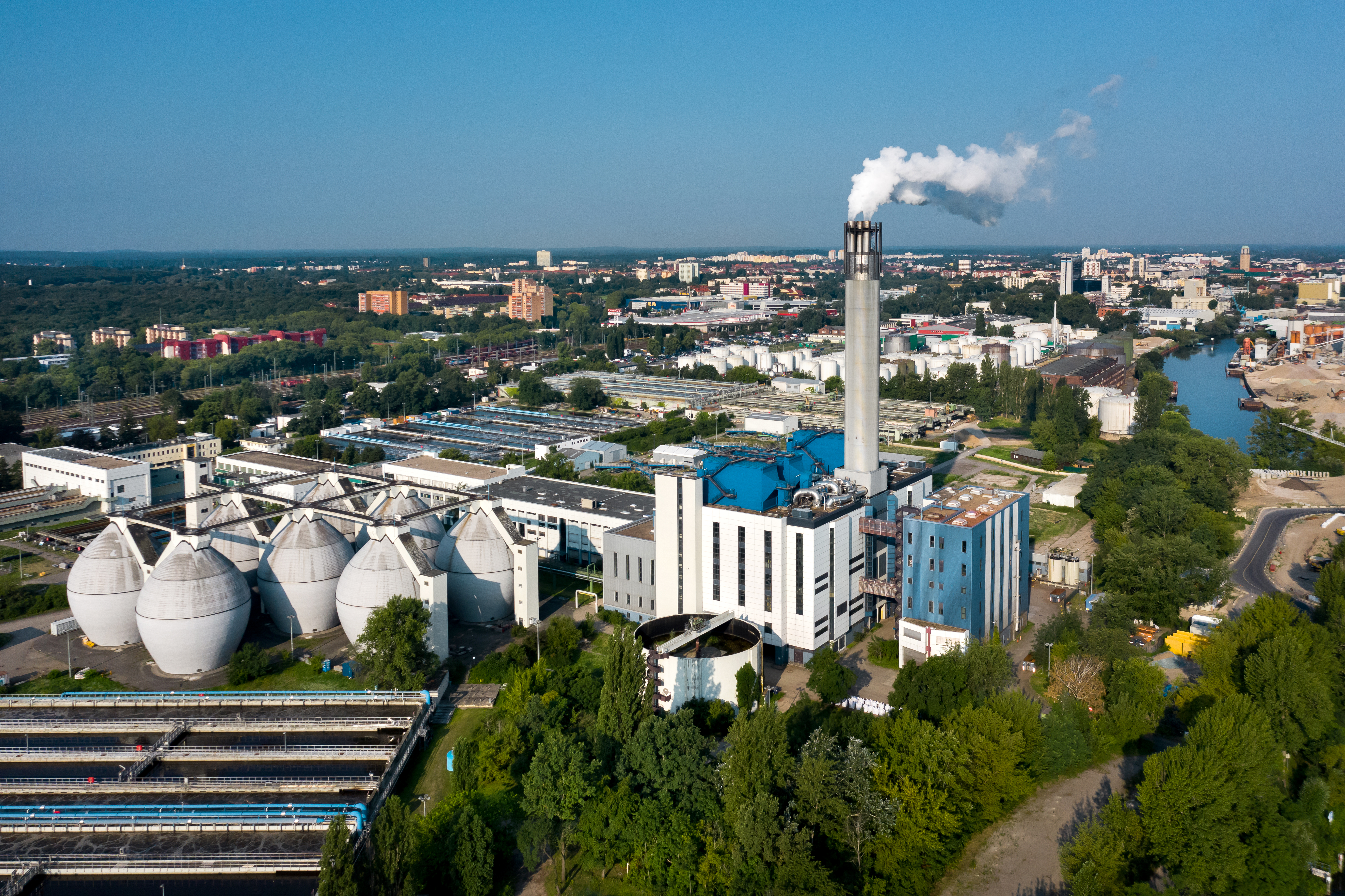
At the Ruhleben wastewater treatment plant in Berlin, up to 180 tonnes of phosphorus are returned to the treatment process each year through sidestreams generated during sewage sludge dewatering. This accounts for approximately 15% of the plant's total phosphorus load. As part of the RÜCKBELASTUNG research project, Kompetenzzentrum Wasser Berlin (KWB), in collaboration with Berliner Wasserbetriebe (BWB), is investigating how this internal phosphorus load can be effectively reduced.
Wastewater treatment produces sewage sludge, which undergoes further processing to remove excess water. The resulting liquid, known as centrate, is returned to the main treatment process. However, it contains substantial amounts of phosphorus that must be removed again. Chemical precipitants are among the methods used to remove phosphorus from wastewater.
This is where the RÜCKBELASTUNG research project comes in: Can phosphorus be removed directly from the sludge dewatering sidestream before it re-enters the main treatment process? And to what extent could this reduce the need for chemical precipitants or relieve the load on biological treatment processes?
Which methods can reduce phosphorus inputs?
To answer these questions, KWB is analysing operational monitoring data from the Ruhleben wastewater treatment plant and developing a model of water, solids and phosphorus flows. In laboratory experiments, the research team is investigating how phosphate can be precipitated and separated from the sidestream.
Based on these investigations, the team will assess how reducing the internal phosphorus load could affect material flows throughout the treatment plant, particularly phosphorus concentrations in the treated effluent and sewage sludge.
Providing a scientific basis for more efficient wastewater treatment
The project aims to establish a sound scientific basis for evaluating suitable treatment methods. Its findings are expected to identify technically feasible options, quantify achievable reductions in phosphorus loads and assess their potential implications for plant operations.
RÜCKBELASTUNG demonstrates how KWB combines scientific analysis, laboratory experiments and modelling to address practical operational challenges in the water sector. The insights gained could help optimise the use of treatment chemicals and support more resource-efficient wastewater treatment.